
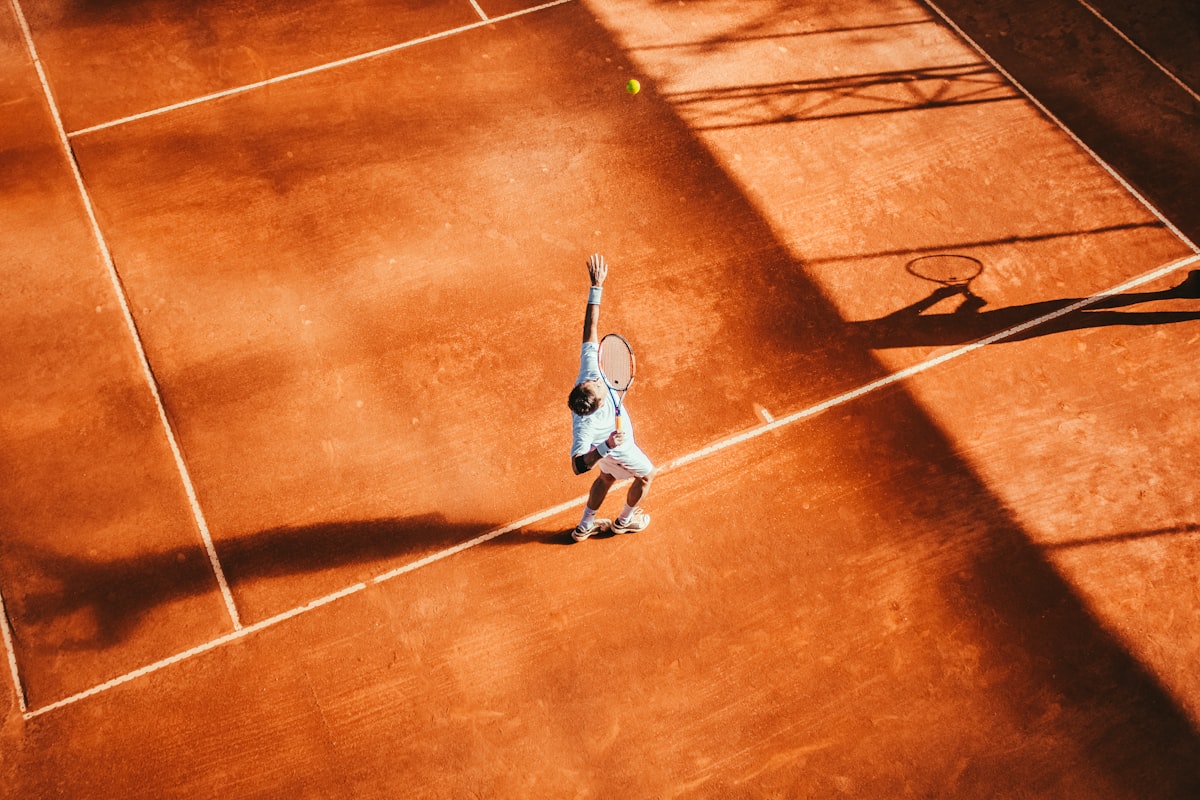
Your new padel club is built, the courts open, players love them. Then the complaints start: the sharp crack of the ball against glass, shouts at match point, music from the clubhouse — carrying across gardens and bedroom windows from morning to midnight. In cities across Europe and North America, noise complaints and planning objections are now the most common reason padel projects get delayed, restricted or rejected outright. The good news: padel court soundproofing is a well-understood engineering problem, solvable at the design stage and, in most cases, retrofittable on existing courts. This guide explains how loud courts actually are, where the sound escapes, and which acoustic solutions genuinely work — plus what to specify when you order.
1. Why Noise Is the #1 Complaint Against New Padel Clubs
Unlike industrial noise, sports noise is predictable — and that is exactly why it gets regulated. Neighbours know that every evening from 6pm to 11pm the court will be in use, and planning authorities treat predictable, repeated noise differently from occasional disturbance. Typical triggers:
- Residential proximity: courts built within 20–50m of houses, especially in mixed-use urban zones
- Glass-box amplification: a 20m x 10m court surrounded by 3m–4m tempered glass panels behaves like a loudspeaker enclosure — the glass reflects sound outward instead of absorbing it
- Evening and weekend peaks: exactly the hours neighbours are at home
- Open mesh sections: the upper third of a court is usually metal mesh, which transmits sound almost freely
Real-world outcomes range from planning conditions limiting play hours, to clubs forced to install barriers after opening, to courts shut down entirely. In several European cities, noise is now listed by developers as one of the top three risks when scouting padel sites. Solving it in the design phase costs a fraction of retrofitting it after complaints arrive.
2. How Loud Is a Padel Court, Really?
Sound is measured in decibels A-weighted — dB(A) — which reflects how the human ear perceives loudness. The ball striking glass is an impulse sound: short, sharp peaks that the ear and brain find far more annoying than a steady noise of the same level. This is why a padel court at 60 dB(A) draws more complaints than traffic at 65 dB(A).
| Source | Typical Level | Context |
|---|---|---|
| Normal conversation | 55–60 dB(A) | Reference point |
| Busy street traffic at 10m | 70–80 dB(A) | Steady noise |
| Padel ball hitting glass at 1m | 85–95 dB(A) | Impulse peaks during play |
| Match play at court side | 70–80 dB(A) | Impacts + shouts, frequent |
| At 30m from an unprotected outdoor court | 55–65 dB(A) | Typical boundary reading |
| Common residential planning limits | 50–55 dB(A) day / 40–45 night | At the property boundary |
Two numbers matter for design. First, sound level falls roughly 6 dB for every doubling of distance from the court — 10m to 20m buys you 6 dB, 20m to 40m another 6 dB. Distance is the cheapest soundproofing you will ever buy. Second, the target at the neighbour's boundary is usually set by local planning conditions; a competent acoustic consultant can model your specific layout and tell you the reduction you need before you spend anything on panels.
3. Where the Sound Escapes: Three Paths
Noise leaves a padel court through three separate paths, and each needs a different treatment. This is why a single "soundproof wall" on one side rarely fixes everything:
- Airborne transmission: sound passes straight through open mesh sections, gaps between glass panels, under the court structure, and around doors. Mesh is acoustically almost transparent — a court with mesh on the noisy side is effectively unprotected above the glass line.
- Structure-borne vibration: every ball impact vibrates the steel frame and the glass panels; that vibration travels down the posts into the foundation and re-radiates as noise at ground level. Neoprene isolation pads and properly tensioned fixings reduce this path significantly.
- Flanking paths: sound goes over barriers that are too low, out of roof gaps in indoor halls, and through doors left open between the court and the street. A 3m barrier with a 4m glass wall behind it is partly defeated — the barrier must break the line of sight.
A complete acoustic design addresses all three paths. Most failed soundproofing jobs treat only one.

4. Outdoor Courts: Acoustic Fencing & Perimeter Barriers
For an outdoor court, the perimeter is where the battle is won or lost. The principles, in order of effectiveness:
- Mass: a solid barrier of 10–20 kg/m² (composite acoustic panels, 19mm+ plywood, concrete or masonry) blocks more sound than thin sheet metal. Thin metal panels rattle and resonate; mass is what stops the sound.
- Absorption, not just reflection: use panels with a noise reduction coefficient (NRC) of 0.8 or higher on the court-facing side. A hard reflective wall just bounces the noise upward and over the top; absorptive panels soak up the energy.
- Height and position: the barrier should be at least as tall as the glass (3–4m) along the noisy sides and close enough to break the line of sight to the neighbour's boundary — typically 1–3m from the court perimeter. Remember not to block the spectator experience on the sides where you want viewing.
- Continuous runs: a 2dB leak in a barrier (a gap, a gate, a corner) can erase half the benefit. Seals, overlaps and closed gates matter.
A well-designed barrier-and-absorption package typically achieves 5–10 dB reduction at the boundary — enough to bring most sites into compliance when combined with sensible distances. As a planning reference, composite acoustic fence panels of 40–50mm thickness run roughly $50–150 per linear metre installed (typical market ranges).
5. Glass Panels: What Actually Works
Clients often ask whether thicker glass is the answer. It is not. Standard court glass — 10mm or 12mm tempered — performs acoustically almost identically, because at these thicknesses the panel's resonance dominates transmission. Upgrading to laminated glass with a PVB interlayer adds modest damping, worth roughly 2–4 dB, mostly at high frequencies; it also improves safety if a panel is ever cracked. What genuinely helps:
- Neoprene isolation pads between glass and frame — they kill vibration transfer and rattle, and they are part of every correctly assembled Hllye court (verify yours are fitted and not hardened with age)
- Sealed joints between panels and at the bottom edge — gaps are direct sound leaks
- Absorption around the glass line — since glass reflects rather than absorbs, the court-facing absorption panels catch the energy before it bounces outward
Think of the glass as a mirror for sound: you cannot make the mirror disappear, but you can stop the light reflecting out of the room. The acoustic treatment belongs around the glass, not in it. For the technical detail on panel types and certification, see our padel court glass guide.
6. Indoor Courts: Treat the Hall, Not Just the Court
Indoor courts have a different problem: not transmission to neighbours (the building walls handle that), but reverberation — the roar inside. In an untreated warehouse conversion, reverberation time (RT60) can reach 3–5 seconds, which makes play loud, confusing and exhausting, and leaks noise through doors and vents into the surrounding area.
- Absorption panels on ceiling and walls: acoustic foam, mineral wool panels or perforated boards with NRC 0.8–0.95. Covering 30–50% of the ceiling area typically brings RT60 down to a target of ~1.5 seconds — the practical range for speech clarity and comfort
- Isolate the court from the slab: in shared buildings, rubber or neoprene pads under the court's steel feet stop impact vibration transmitting into the structure — the same principle as the glass pads
- Keep doors closed: court-side doors left open are the biggest flanking leak in indoor venues; a lobby acts as a natural sound lock
- Coordinate with climate: ventilation and air conditioning are themselves noise sources — see our indoor ventilation guide for airflow design that does not fight your acoustics
7. Retrofit Solutions for Existing Courts
Already getting complaints? Work down this list in priority order — each step is measurable and most are affordable:
- Replace mesh with solid absorptive panels on the noise-sensitive side(s). This is the single highest-impact retrofit for outdoor courts; typical cost $2,000–6,000 per court for one side (panels, fittings, labour — market ranges)
- Add a perimeter acoustic barrier (3–4m) on exposed sides, positioned to break line of sight
- Seal the leaks: bottom gaps, panel joints, doors. Cheap and often worth several dB
- Indoor halls: add ceiling/wall absorption to cut reverberation and the "roar" that carries
- Management measures: restrict music, close doors, and (as a last resort) cap evening play hours while the physical fixes are installed
Measure first. Hire an acoustic consultant for a day to take boundary readings during peak play (a basic survey is typically a few hundred to low thousands of dollars). You will know your exact deficit — and you will avoid spending on the wrong fix. Green screens and hedges are pleasant but only worth 1–3 dB alone; use them as a finishing layer on top of a solid barrier, not instead of one.
8. What to Specify with Your Court Order
If you are buying new courts, the acoustic package should be agreed at order time — it is far cheaper to build in than to bolt on. Here is the checklist to give your supplier:
| Item | Specification | Typical Cost Impact |
|---|---|---|
| Mesh on noise-sensitive side | Solid absorptive panels, 10–20 kg/m², NRC 0.8+ | +$1,500–4,000 per court |
| Perimeter acoustic barrier | 3–4m high on exposed sides, continuous | $50–150 per linear metre |
| Glass option | Standard 10–12mm tempered; laminated PVB where vibration is a concern | +8–15% on glass cost |
| Isolation & sealing | Neoprene pads on all glass, sealed panel joints and bottom gaps | Included |
| Indoor absorption | Ceiling panels over 30–50% of hall area, NRC 0.8–0.95 | $20–60 per m² |
As a rule of thumb, a properly treated site adds 5–12% to the court budget — compared with the cost of lost planning permission, restricted hours, or a retrofit while the club is running, it is the cheapest insurance a project can buy. Model the full facility numbers with our padel court cost calculator, and see the indoor vs outdoor comparison for how the acoustic strategy changes with your building choice.
9. FAQ
How much noise does a padel court make?
Impacts on glass peak at roughly 85–95 dB(A) at 1m; at a 30m boundary an unprotected court typically reads 55–65 dB(A). Because the sounds are sharp impulses, courts are perceived as louder than steady noise at the same level.
Can I build a padel court next to houses?
Yes, if the design closes the gap to local limits. Distance, a solid absorptive perimeter barrier at least as tall as the glass, and sealed mesh-to-panel conversions on the noisy side usually bring a site into compliance. Check planning conditions early and involve an acoustic consultant.
Do acoustic fences work for padel courts?
Solid, absorptive barriers of 10–20 kg/m² typically deliver 5–10 dB reduction at the boundary when continuous and tall enough. Thin sheet-metal "fences" without absorption mass are far less effective.
Is thicker glass better for soundproofing a padel court?
Not meaningfully — 10mm and 12mm tempered panels perform almost identically because resonance dominates. Laminated PVB glass adds 2–4 dB at high frequencies; the real gains come from absorption and isolation around the glass, not the panel itself.
How much does it cost to soundproof a padel court?
Typically 5–12% of the court budget for a fully treated site: $1,500–4,000 per court to convert mesh to absorptive panels, $50–150 per metre for perimeter barriers, $20–60 per m² for indoor absorption.
Can I retrofit soundproofing on an existing court?
Mostly yes. Priority order: solid absorptive panels over mesh, perimeter barrier, joint sealing, indoor absorption, then management measures. Measure boundary levels first so you fix the real deficit.
Build a Court That Keeps the Neighbours Happy
Get factory-direct pricing on complete courts plus an acoustic package spec'd for your site — barriers, absorptive panels and isolation, all from one supplier.
Request a Quote Now